What tannin is and how to spot it in your glass
 Save
Tannin is a naturally occurring compound that gives red wine its dry, mouth-coating sensation. It comes mainly from grape skins, seeds and stems, and from oak barrels during ageing. Understanding tannin helps you choose wines you'll enjoy and pair them more confidently with food. Ballantynes explores where it comes from, what it feels like, and how to work with it.
The physical sensation tannin creates
Tannin makes your mouth feel dry, your gums slightly grippy, and your tongue rough or puckered. It is not a flavour but a tactile response, similar to the feeling you get from strong black tea left to steep too long. Some people describe it as astringent or chalky.
The dryness happens because tannins bind to proteins in your saliva, temporarily reducing its lubricating effect. This sensation builds with each sip and lingers after you swallow.
Where tannin in wine comes from
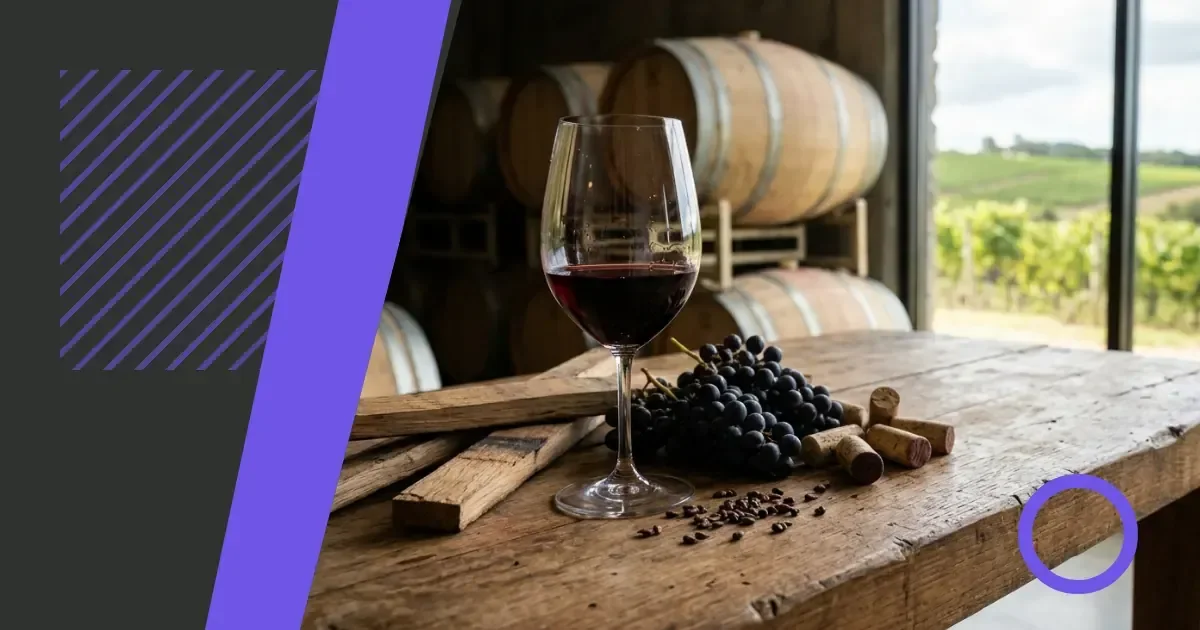
Grape skins are the primary source. Red wines are made by leaving the juice in contact with the skins during fermentation, a process called maceration. The longer the contact, the more tannin is extracted. White wines have little tannin because the skins are removed early, whilst orange wines gain their structure from extended skin contact with white grapes.
Seeds and stems add tannin too, though winemakers often remove stems to avoid bitterness. Oak barrels contribute tannins of their own, which tend to feel softer and rounder than those from grape skins.
Grape varieties and their tannin levels
Thick-skinned varieties such as Cabernet Sauvignon, Nebbiolo and Tannat produce wines with high tannin. Thinner-skinned grapes such as Pinot Noir and Gamay yield softer, lighter reds. The climate and vineyard also play a role: warm regions often produce riper tannins that feel smoother, whilst cooler climates can give firmer, more angular tannins.
How to identify tannin when tasting
Pour a small amount and take a sip, letting the wine sit on your tongue for a few seconds before swallowing. Notice the texture rather than the flavour. Does your mouth feel drier afterwards? Does the inside of your cheeks feel rough or tight?
High-tannin wines leave a pronounced drying sensation and a firm grip. Low-tannin wines feel smooth and juicy, with little astringency. Medium-tannin wines sit between the two, offering structure without overwhelming your palate.
Tannin versus acidity
Acidity makes your mouth water and creates a sharp, fresh sensation, often felt on the sides of your tongue. Tannin does the opposite: it dries your mouth and coats your gums. Both contribute to a wine's structure, but in different ways. A balanced red wine has enough acidity to keep it lively and enough tannin to give it weight.
Why tannin matters for ageing and food pairing
Tannins act as a natural preservative, allowing some red wines to improve over years or decades. As a wine ages, tannins soften and integrate, losing their initial roughness. This is why young, tannic wines can feel harsh, whilst older bottles taste smoother and more harmonious.
Protein-rich foods such as roast lamb, beef or aged cheese bind with tannins in the same way saliva does, softening the wine's astringency and making both the food and the wine taste better. Fatty dishes also work well, as the fat coats your palate and balances the drying effect. If you are pairing wine with chocolate, choose a bottle with lower tannin to avoid bitterness.
Managing tannin to suit your taste
If a wine feels too tannic, try these steps to make it more approachable:
- Decant the bottle and let it breathe for half an hour to an hour before serving.
- Serve the wine slightly cooler than room temperature, around fifteen to seventeen degrees Celsius, which softens the perception of tannin.
- Pair it with fatty or protein-rich food to counteract the drying sensation.
- Keep the bottle and taste it again after a day or two, as some wines open up and mellow with air exposure.
For wines you find too soft, look for bottles labelled with high-tannin varieties or longer ageing in new oak.
Common misconceptions about tannin
Tannin is not the same as bitterness, though the two can overlap. Bitterness is a taste, whilst tannin is a texture. Overextracted tannins from seeds or stems can taste bitter, but well-handled tannins simply feel dry.
Many people assume all red wines are tannic, but lighter styles such as Beaujolais or young Rioja have gentle tannins that barely register. Conversely, some white wines aged in oak or made with extended skin contact carry noticeable tannin.
Tannin and sulphites
Tannin is unrelated to sulphites, the preservatives added to most wines. If a wine gives you a headache or an allergic reaction, it is more likely due to histamines or sulphites than tannin itself.
Choosing wines by their tannin level
The table below compares red wine styles by their typical tannin structure:
| Tannin level | Typical varieties | Serving suggestion |
|---|---|---|
| Low | Pinot Noir, Gamay | Serve lightly chilled with salmon or mushroom dishes |
| Medium | Merlot, Sangiovese | Pair with pasta, tomato-based sauces or roast chicken |
| High | Cabernet Sauvignon, Nebbiolo, Tannat | Match with grilled steak, lamb or mature hard cheese |
Wine labels rarely state tannin levels directly, but grape variety and ageing notes offer clues. Phrases such as "structured", "full-bodied" or "suitable for cellaring" usually signal higher tannins.
Building confidence with tannic wines
Start with medium-tannin reds such as Merlot or Chianti, which offer structure without overwhelming your palate. As you grow comfortable with the sensation, try a young Cabernet Sauvignon or Barolo alongside a rich meal.
Tasting the same wine over several days shows how tannin evolves with air exposure. Some bottles that feel tight on opening taste rounder and more approachable the next evening.
#Tannin #Red wine #Wine tasting #Food pairing
Download PDF: Tasting for tannin: a quick guide PDF, 28 KB
Further reading
Frequently asked questions
What does tannin taste like in wine?
Tannin does not have a taste but creates a dry, grippy texture in your mouth, similar to the feeling from oversteeped tea. It coats your gums and makes your tongue feel rough.
Do white wines have tannin?
Most white wines have very little tannin because the grape skins are removed early. Orange wines and some whites aged in oak barrels can carry noticeable tannin.
How do you reduce tannin in wine?
Decanting the wine and letting it breathe softens the perception of tannin. Serving it slightly cooler and pairing it with fatty or protein-rich food also helps balance the drying sensation.